Discover the four qualities used to describe a diamond: cut, colour, clarity and carat weight. Compare them together when choosing your stone.
Cut
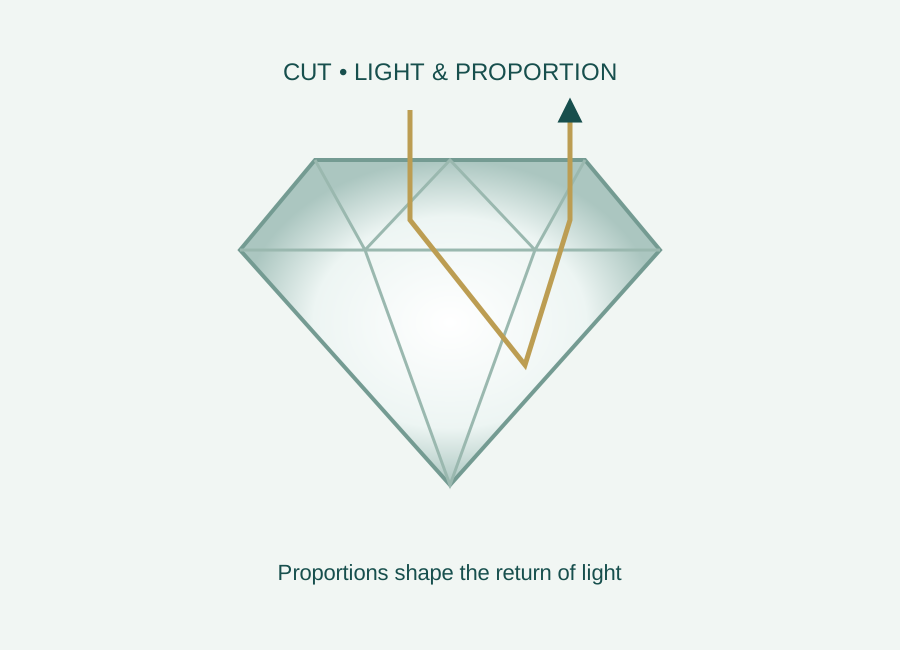
Proportions, symmetry and polish influence the way a diamond reflects light. Cut quality is different from outline: round, oval and pear describe shape. A cut grade is not available for every diamond shape.
Colour
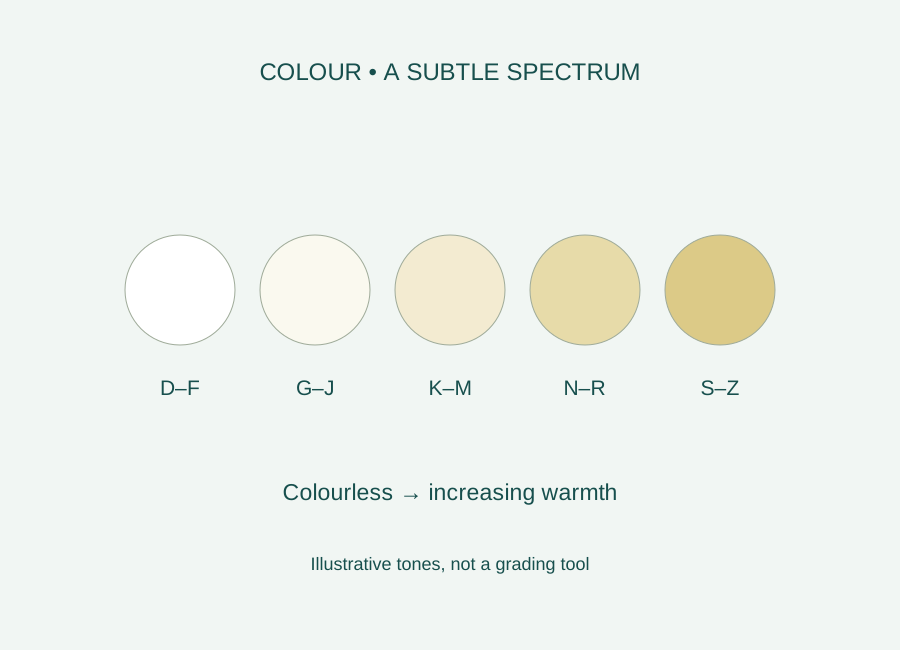
The D–Z scale describes colour in the normal range. D–F is colourless, G–J near colourless and K–M faint colour. Compare stones under consistent lighting; fancy colours use a different grading approach.
Clarity
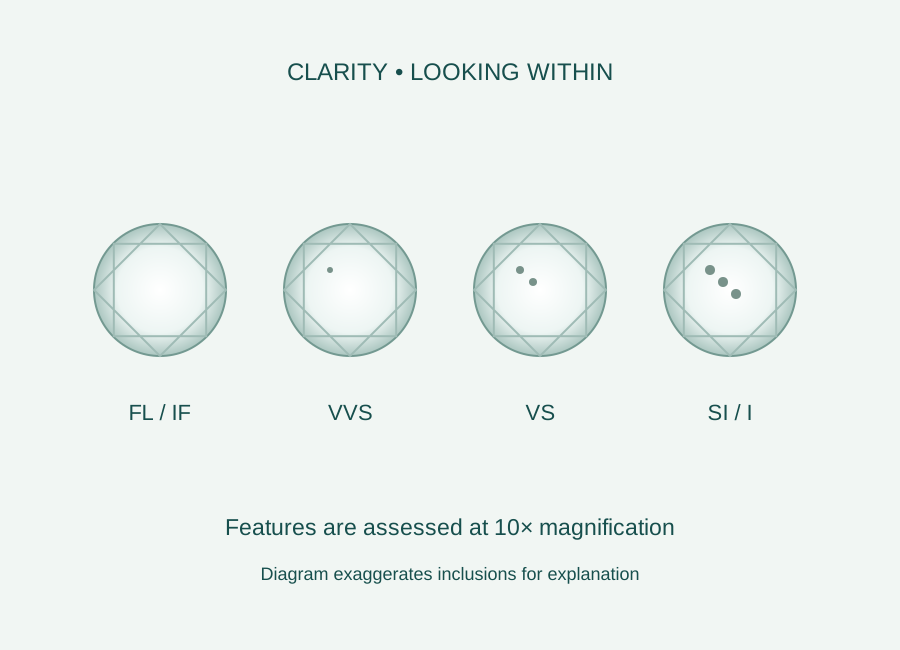
Clarity assesses internal inclusions and surface blemishes. Grades include FL, IF, VVS1–VVS2, VS1–VS2, SI1–SI2 and I1–I3. Visibility depends on the size, position and nature of a feature, so a grade alone cannot guarantee an eye-clean appearance.
Carat
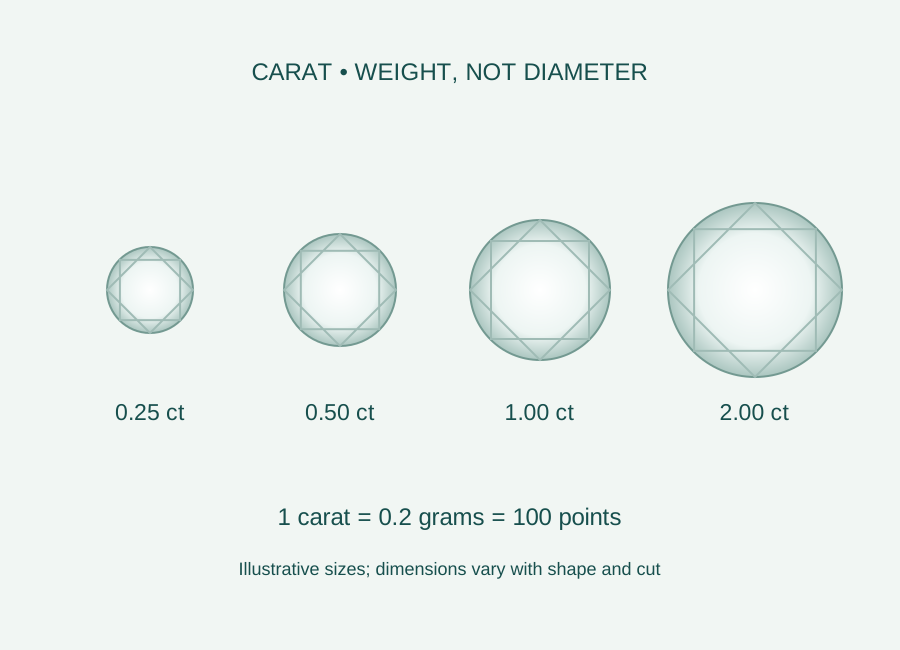
Carat measures weight: one carat is 0.2 grams, divided into 100 points. Two stones of equal weight may have different visible dimensions. Consider the millimetre measurements and proportions alongside the carat figure.